Art Hotels
Six hotels where the plan decides which way to look.
6 hotels
Numbers 13–18
Coordinates D1–D6
Art hotels are collected here as buildings where the plan itself makes a decision about direction: a long side held over a drop, a glass end pushed at water, terraces cut into one wall of a crater. A hotel that only hangs paintings in its corridors does not belong in this group. The building has to do the work.
No. 13
Art Hotels
Miramonti Boutique Hotel
Hafling, South Tyrol, Italy
The long side stands on the edge of a slope and is held over the Merano valley
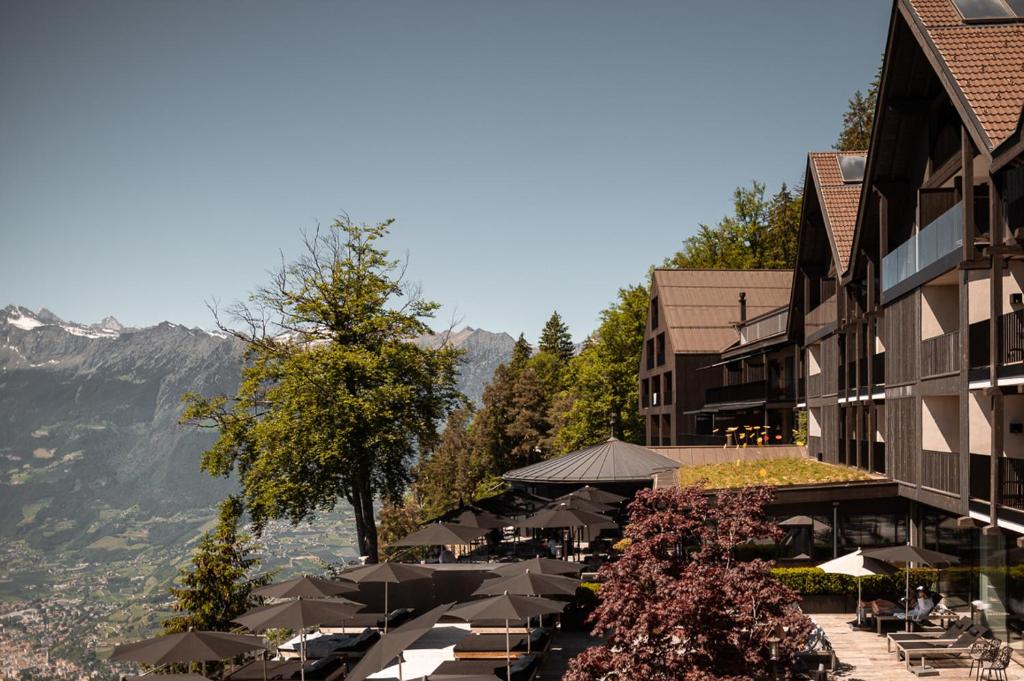
Above Hafling in South Tyrol the building sits at the point where the ground falls away, and its long elevation is set parallel to that edge. Rooms and terraces are placed along it. The short ends are closed, and the approach comes uphill from behind the house.
On that side the ground drops through pasture and larch towards the Merano basin, with the town spread on the valley floor and the Dolomite ridges standing along the far rim. Weather crosses the valley in full view, and cloud often sits below the level of the terrace.
Behind the house the slope keeps climbing towards the Hafling plateau, through meadow, farm tracks and scattered timber buildings. The road, the car park and the service entrance are on that upper side, so the back of the hotel meets the hill directly.
The last stretch is a mountain road with tight bends, so arrange the drive or a transfer before the day of arrival.
Sheet dated: September 2027
No. 14
Art Hotels
Manshausen
Steigen, Norway
Cabins are cantilevered from old stone quays with their glass ends turned to the Vestfjord
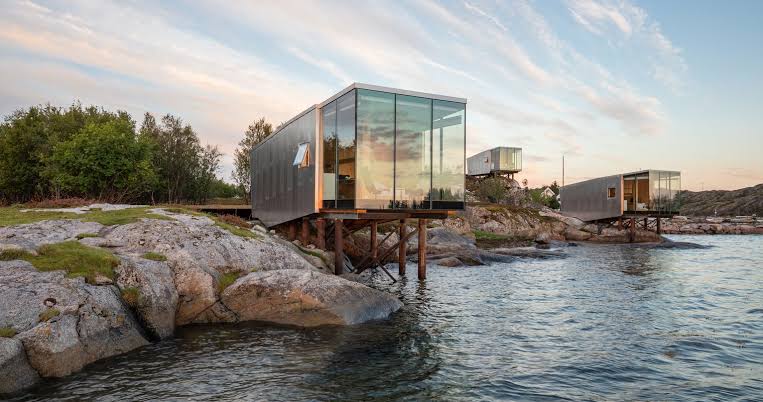
Small timber units stand on stone quay walls on an island in Steigen, each one pushed out over the water. The end wall of every unit is glass, and that end is the front. The units are set apart from one another so that none looks into its neighbour.
On that side is the Vestfjord: open water, tidal current running past the quay, and the mountains of Lofoten standing on the far horizon. Seabirds and small boats pass close in. In winter the water stays dark while the surrounding rock and heath hold snow.
Behind each unit the island rises immediately into bare rock, heather and low scrub, with a path linking the cabins to the main house and the harbour. That side is closed timber, and it takes the weather coming off the land.
Getting to the island needs a boat, so fix the crossing and its timing before you travel.
Sheet dated: September 2027
No. 15
Art Hotels
Kasbah du Toubkal
Imlil, Morocco
Buildings stand on a spur above Imlil and are open to the Atlas slopes around them
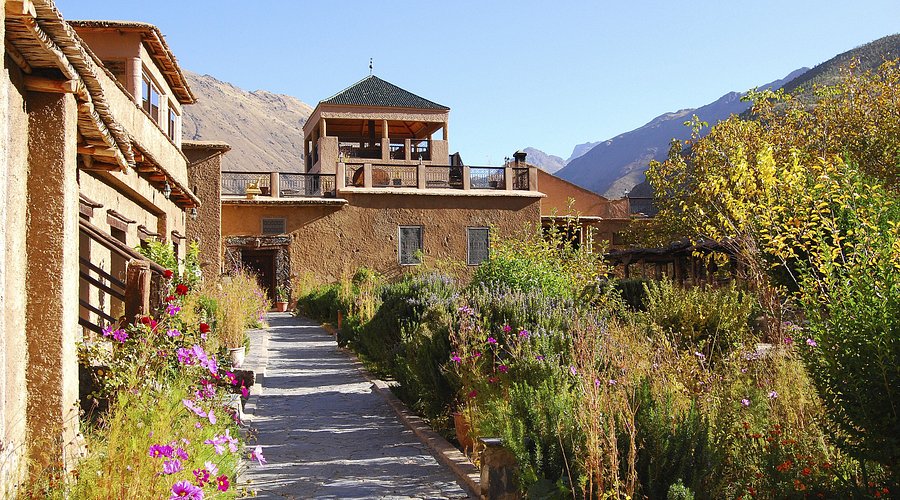
Stone and earth walls follow the shape of a rocky spur above the village of Imlil, so the buildings turn outward on three sides rather than one. Terraces and roof platforms are cut into the same slope. The way in is a mule track climbing from the valley floor.
On the open sides are the slopes of the High Atlas, terraced walnut and fruit gardens on the valley floor, and the path towards Toubkal that walkers use. Village roofs sit below, close enough for sound to carry. Snow holds on the higher ground well into spring.
Behind the buildings the spur meets the mountain wall, bare rock with a track running along it. Storage, kitchens and staff areas are placed on that side, where there is no drop, so the closed part of the plan sits against the hill.
The final approach is on foot or by mule, so agree in advance what happens with your luggage.
Sheet dated: September 2027
No. 16
Art Hotels
Katikies Hotel
Oia, Santorini, Greece
Terraces are cut into the caldera wall and every one of them faces the same way
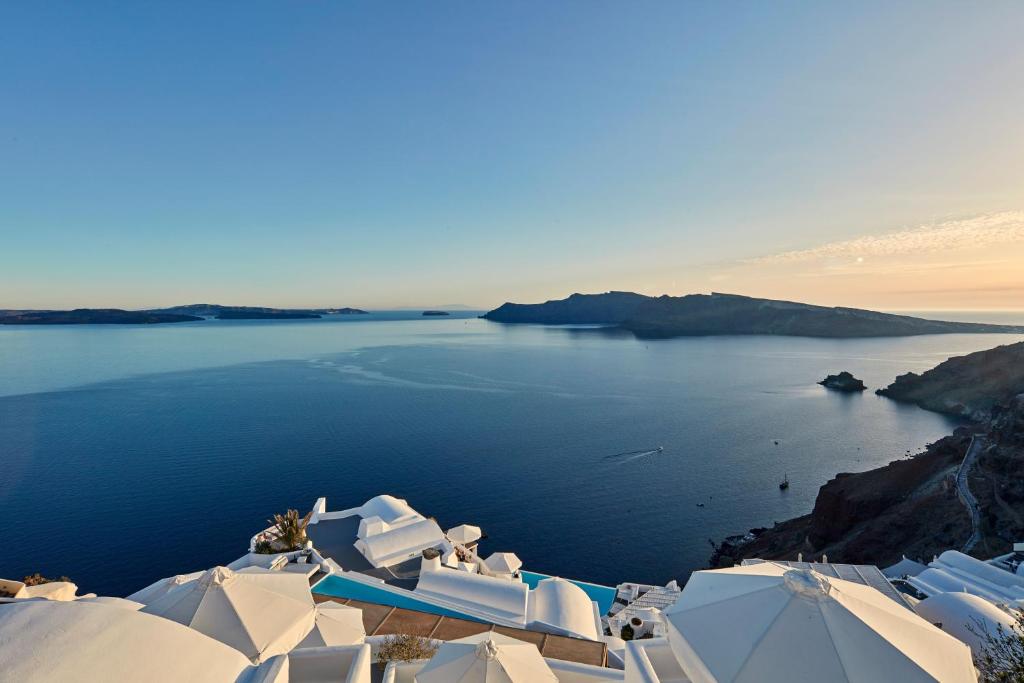
White stepped volumes are set into the inner wall of the caldera at Oia, one level below another. Because the ground allows only one open side, the whole hotel is turned outward together, towards the water in the crater. Stairs, not corridors, connect the levels.
On that side is the flooded crater of Santorini, with the islets of Nea Kameni and Palea Kameni in the middle of it and Thirasia across the water. Ferries and small boats cross below. The rock face drops steeply from the terraces to the sea.
Behind the terraces the village continues above the cliff edge: lanes too narrow for cars, shops, churches and other houses built on the same shelf. Luggage is carried in on foot from there, and the back of the hotel is solid rock.
Cars stop at the edge of Oia and the last part is stairs, so arrange help with heavy cases beforehand.
Sheet dated: September 2027
No. 17
Art Hotels
Grand Hotel Kronenhof
Pontresina, Switzerland
A nineteenth-century block in Pontresina with its main front turned up the Roseg valley
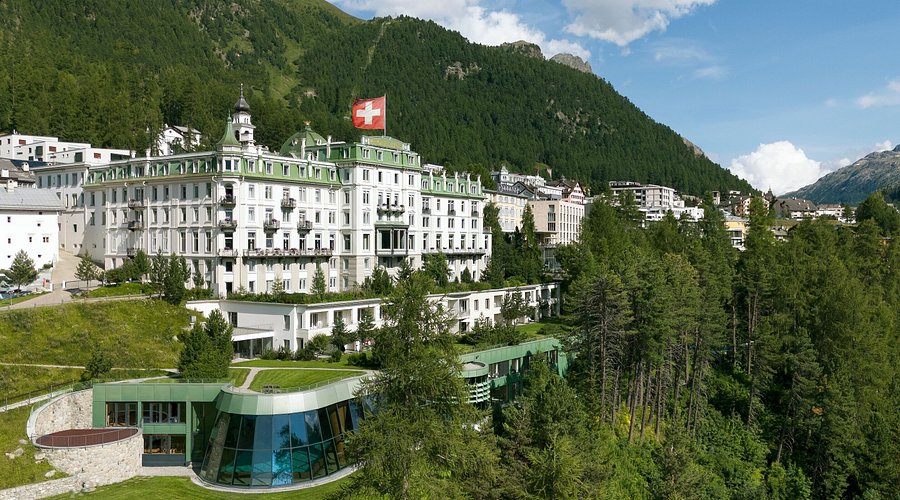
Its garden elevation is the working front of the house: a wide symmetrical wall of windows above a lawn and terrace, set at the edge of Pontresina. The building was placed so that this side looks up the side valley towards the Roseg glacier rather than at the village street.
On that side are the lawn, the trees at the edge of it, and then the Roseg valley running south between forested slopes towards ice and rock at its head. A footpath and a horse-drawn carriage route start from near the hotel and follow the valley floor.
Behind the house is Pontresina: the main street, the railway station down the hill, and the road towards the Bernina pass. Deliveries and cars arrive on that side, which carries the entrance canopy and keeps service away from the lawn.
Check whether you arrive by train at Pontresina or by car over the pass, and arrange the last transfer.
Sheet dated: September 2027
No. 18
Art Hotels
Sacromonte Landscape Hotel
Pueblo Edén, Uruguay
Separate shelters are placed apart on a hillside, each with one glass side to the vines
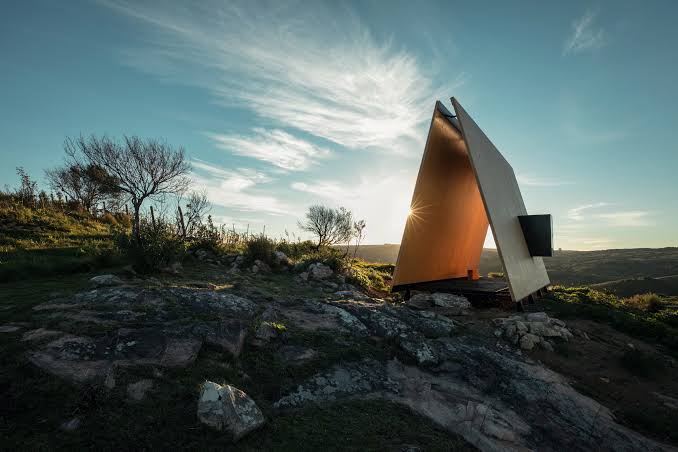
Individual units sit low on a slope near Pueblo Edén in Maldonado, spaced far enough apart that each keeps its own outlook. One wall of every unit is glass and curved; the rest is closed and clad in dark material. That glass wall is turned down the hill.
On that side are vineyards on the lower ground, grazing land, granite outcrops and the low hills of the Uruguayan interior running away without a town in sight. Horses and cattle move across that ground. At night there is very little artificial light in the whole view.
Behind each shelter the hillside rises to the track that links the units to the main house, the winery and the restaurant. That side is closed wall with a door in it, so arrivals happen out of sight of the glass.
The access road is unpaved for its final stretch, so confirm the vehicle you need before you set out.
Sheet dated: September 2027
Direction here is read off maps, plans and published photographs, never measured by us, and never given in degrees. It says how a building is turned, not which side is worth asking for. The date in the last cell of an entry is when those sources were opened.