Capsule Hotels
Four capsule hotels, read as buildings without an outward side.
4 hotels
Numbers 01–04
Coordinates A1–A4
Capsule hotels are gathered here because they answer the question in an awkward way. Sleeping units sit inside a larger building and rarely touch an outside wall, so the direction that matters is an internal one. What does not belong in this group is a small room with a window; a unit needs to be a fitted berth reached from a shared passage.
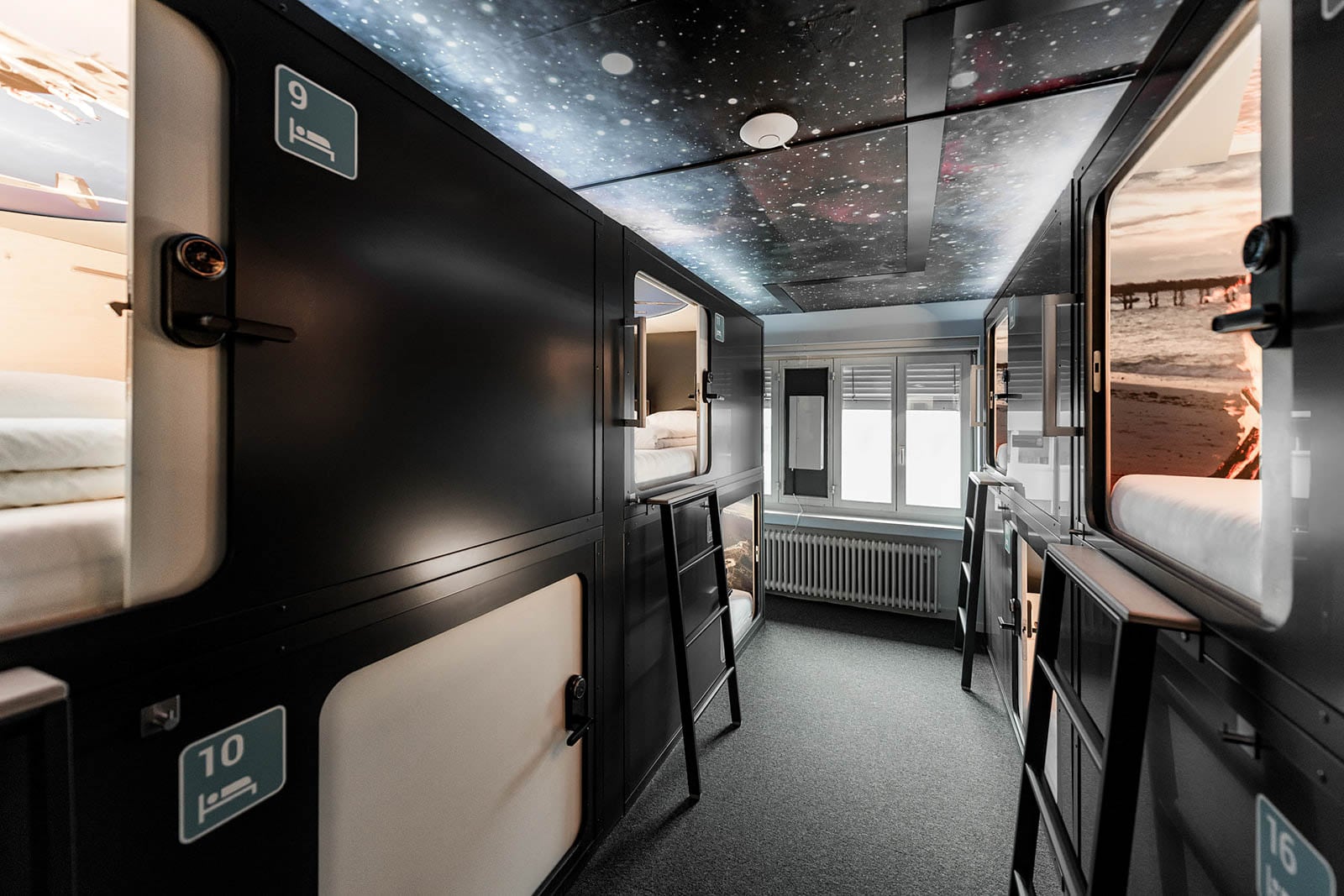
No. 01
Capsule Hotels
First Cabin Akihabara
Tokyo, Japan
The cabins face an interior light court, so this hotel has no outward side at all
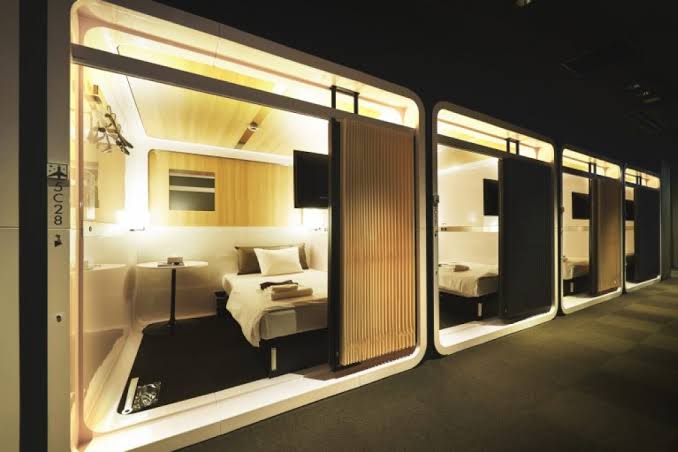
Sleeping cabins here are arranged along interior corridors on upper floors of a shared building in Akihabara. The front of the hotel is a doorway and a reception counter, not a facade. Guests turn inward from the street, and every cabin faces the light court rather than the city.
On that side there is no view in the usual sense. The light court carries daylight down through the building and returns the flat sound of the floors around it. What lies beyond the walls is Akihabara: electronics shops, small eating places and a railway line that runs close to the block.
Behind the cabins are the shared parts of the hotel: washrooms, lockers, a lounge and the lift lobby that connects to the street entrance. The building continues around them with other tenants, so the hotel's back is simply more building.
Ask in advance about luggage size limits and where large cases are kept, since cabins hold very little.
Sheet dated: September 2027
No. 02
Capsule Hotels
The Millennials Fukuoka
Fukuoka, Japan
Sleeping units look inward to a shared work floor rather than out across central Fukuoka
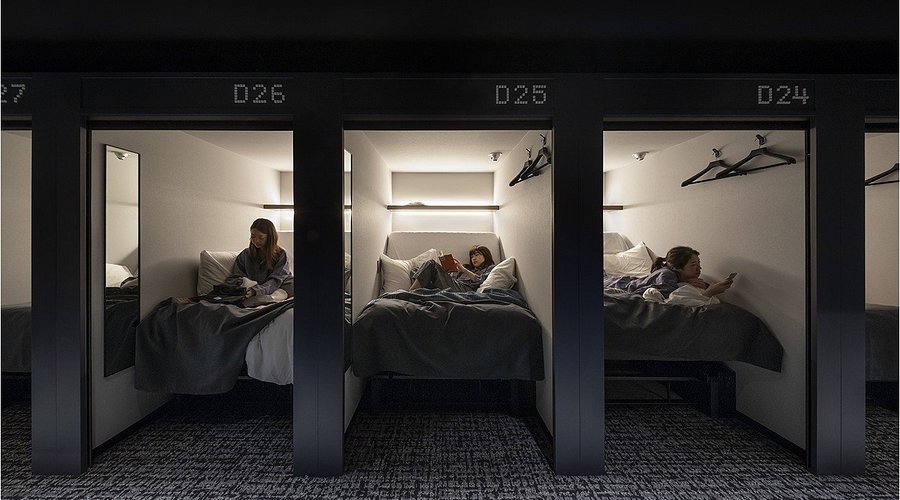
The plan puts sleeping units in rows along inner passages, with the shared work floor and kitchen at the centre of the hotel. Its outward face is the street entrance in the Tenjin area of Fukuoka. From the units themselves there is no exterior wall to look through.
What sits on that inner side is the common room: long tables, power sockets, a kitchen counter and people working at odd hours. The city reaches the hotel only at the entrance, where Tenjin's shopping streets, bus stops and subway exits begin within a short walk of the door.
Behind each row of units run service corridors, washrooms and the laundry. Past those is the outer wall of the building, shared with other floors and other businesses, so the back of this hotel never becomes a facade.
Sort out your arrival time before the day itself, since access to the sleeping floors is by key card and floors may be separated.
Sheet dated: September 2027
No. 03
Capsule Hotels
CityHub Amsterdam
Amsterdam, Netherlands
One facade meets the street; everything else in this hotel turns towards a single inner passage
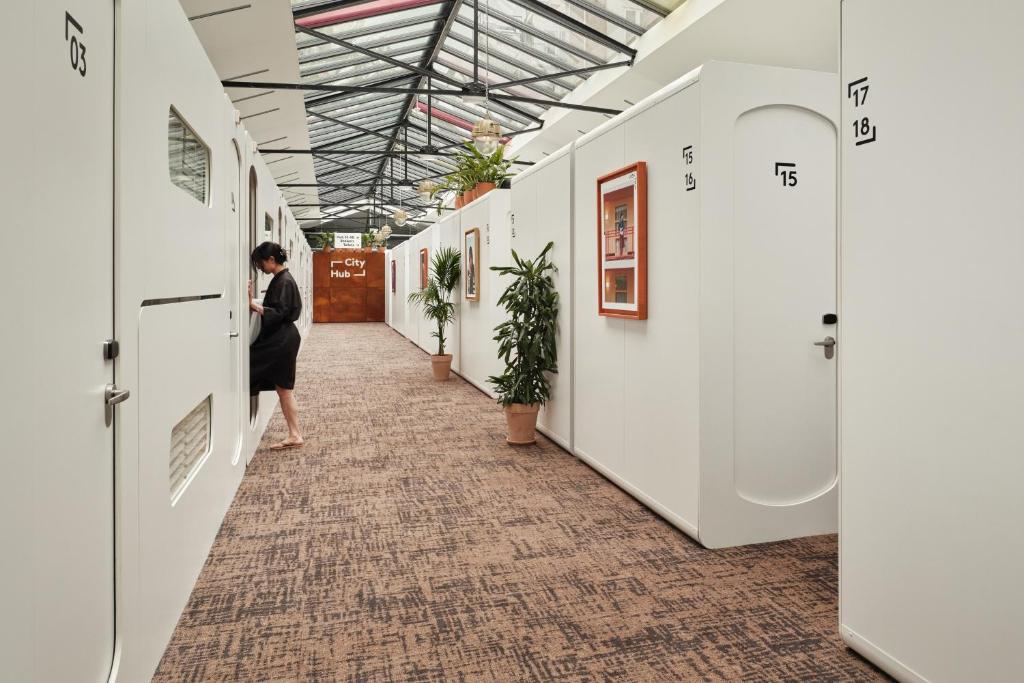
Rows of sleeping hubs stand along one long interior passage, and none of them touches an outside wall. The hotel presents a single face to the street in Amsterdam West, where the entrance and the bar are. Inside, direction is set by the passage, not by the city grid.
Along that passage are the hub doors, the lounge and the bar that doubles as reception. Outside the one street facade lies an ordinary Amsterdam block: tram tracks, a canal a few streets away, and housing that keeps the same low roofline in every direction from the door.
Behind the hubs are washrooms, luggage rooms and the back of the building, which faces a yard rather than a street. Nothing there is meant to be looked at, and the hotel makes no claim on that side.
Confirm how the hub door and the key card work before you arrive late in the evening, and pack a small towel.
Sheet dated: September 2027
No. 04
Capsule Hotels
Aerotel Kuala Lumpur
Kuala Lumpur International Airport, Malaysia
Cabins sit inside a terminal, so this hotel has no outside wall and no street address
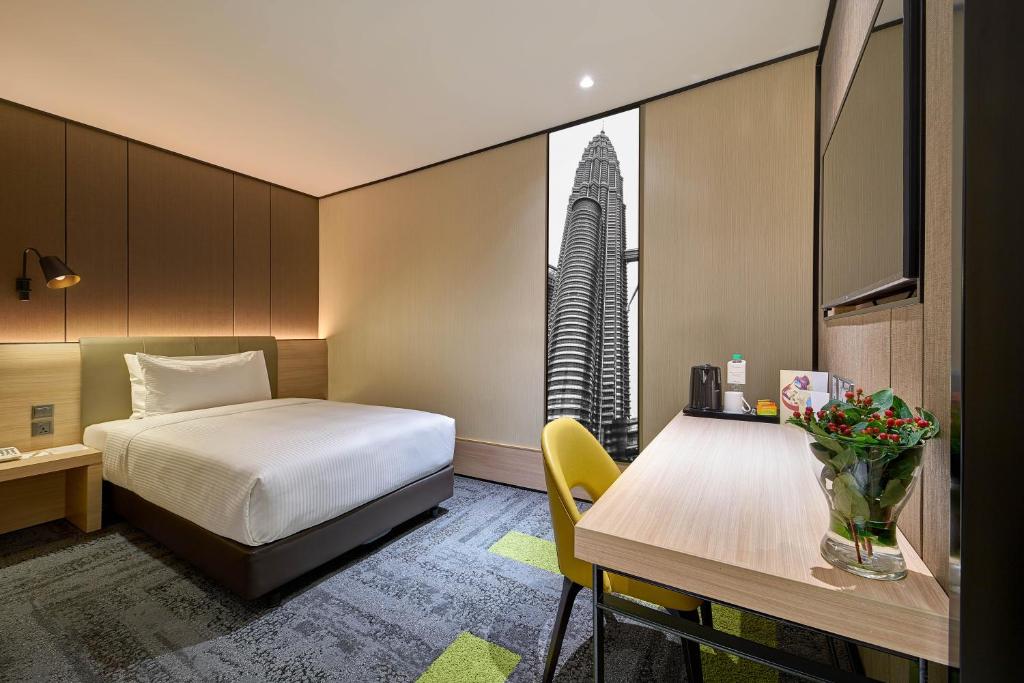
Everything here is held within the airport building at Kuala Lumpur International, where the cabins open off internal corridors on a level shared with gates and shops. The front of the hotel is a reception desk in a terminal hall. There is no exterior wall to turn anywhere.
On the side that counts is the terminal itself: the concourse, the shops, the announcements and the flow of passengers between flights. That is the landscape this hotel was built to face, and its hours follow arrivals and departures rather than daylight over the surrounding forest.
Behind the cabin corridors are service rooms, showers and the plant that keeps the level running. Past those walls the airport continues in every direction, so the back of this hotel is another part of the same terminal.
Check which terminal and which level the reception is on before you land, and keep your boarding pass to hand.
Sheet dated: September 2027
Direction here is read off maps, plans and published photographs, never measured by us, and never given in degrees. It says how a building is turned, not which side is worth asking for. The date in the last cell of an entry is when those sources were opened.